*Raw milk is not for human consumption in the state of Illinois*
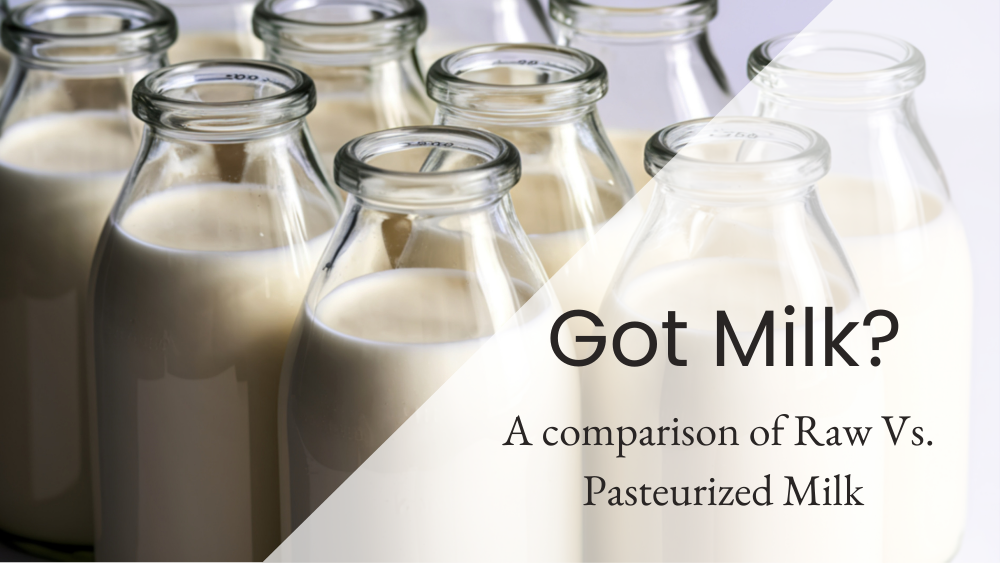
What is raw milk exactly, and why is it so good for us? How does raw milk compare to pasteurized milk in terms of health benefits?
Whether you’re an avid raw milk consumer, or just starting to do your research on it, we hope this post helps you understand raw milk better.
RAW VS. PASTEURIZED - ARE THEY REALLY SO DIFFERENT?
In short, YES, there is a huge difference between raw and pasteurized milk.
Raw milk is simply unpasteurized, unhomogenized milk. It comes straight from the animal and is never heated up. The milk is cooled down immediately after milking the animal.
Pasteurized milk is heated up to specific temperatures, meant to kill all of the “bad” bacteria and “germs” that are in the milk.

So what does pasteurization actually do?
There are lots of living microorganisms naturally present in milk including bacteria, enzymes, proteins, and more.
Pasteurization uses heat to kill off the “bad” bacteria and “germs”, but also kills, alters or reduces all of the good bacteria and other microorganisms (more on that below).
Raw milk has a natural built in protective system that works to prevent absorption of pathogens and toxins and ensures bioavailability of all nutrients.


Images taken from A Campaign for Real Milk PowerPoint (9.4MB PPT) by the Weston A. Price Foundation, September 2011 Update
Available nutrients…a comparison of raw vs. pasteurized milk
Raw milk is a whole, living food, meaning it has living micro-organisms in it that nourish us and support our gut and immune health.
Pasteurized milk is a dead food, meaning everything that was once living in the milk has been either altered, denatured, or destroyed altogether. The slight exception is VAT or low-temp pasteurization, which removes some of the beneficial components in raw milk, but not all.
The nutrients that are present in raw milk either aren’t present after high-temp pasteurization, or they are no longer bioavailable because of being inactivated by the heat.
Oftentimes, synthetic vitamins and minerals are added back into milk after pasteurization, meaning they are less bio-available, if at all.
Why not drink nature’s perfect food in its original form? Feeding our bodies whole, unprocessed foods will always support our health in ways that processed, denatured foods simply can’t.

We just scratched the surface of talking about the differences between raw and pasteurized milk. If you want to dig deeper, we recommend taking a look at the Weston A. Price Foundation resources on this topic.